
Rue Ransfort: the voluntary sector joins forces to ensure a building in Molenbeek serves a social purpose
Actualité - 30/09/2026
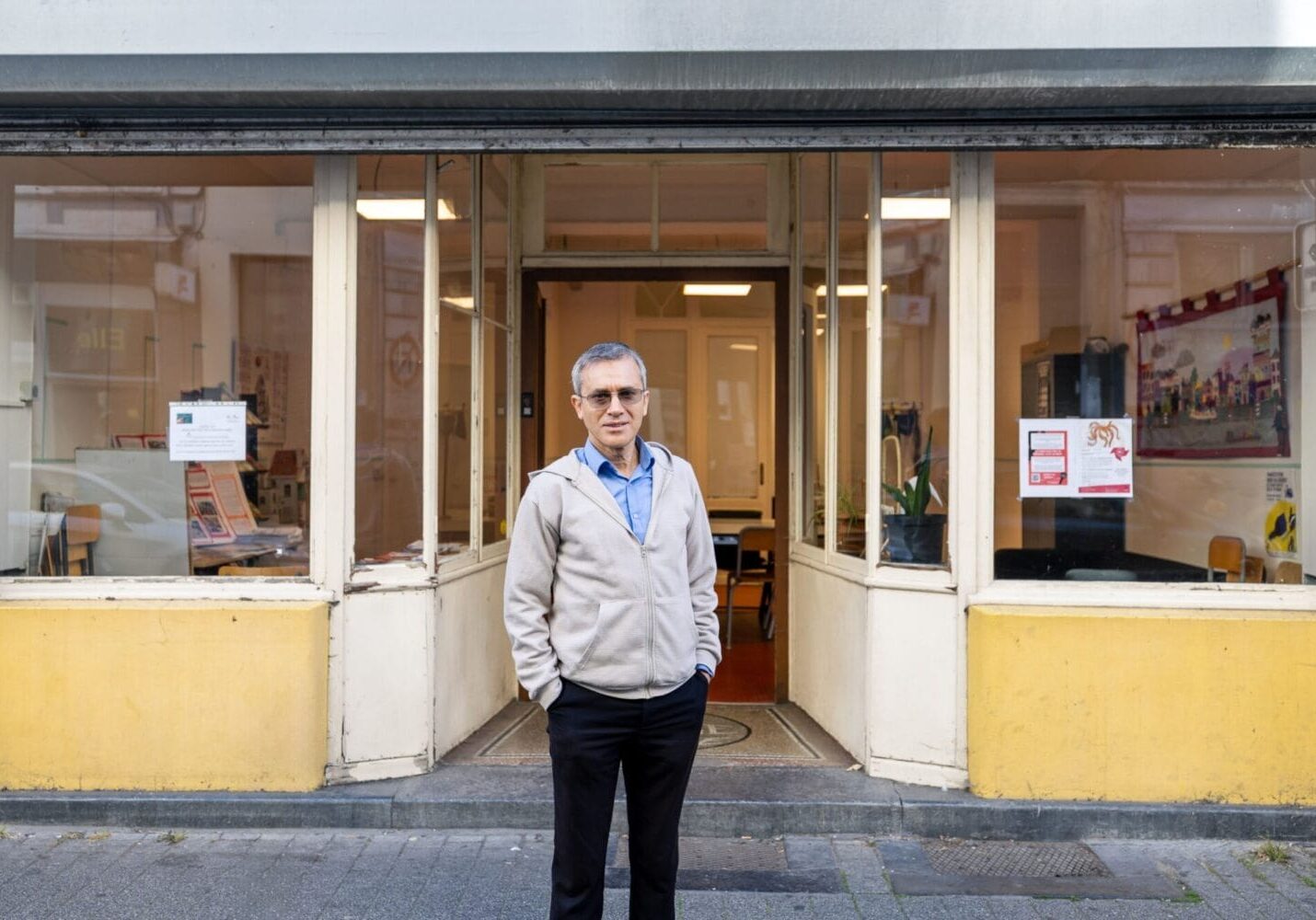
A 620 m² building in the heart of Molenbeek, two-thirds of which is vacant. One charity needs to sell, whilst another cannot afford to buy. Between these two constraints lies a third way: cooperation.
Fair Ground Brussels has just finalised the purchase of a building on Rue Ransfort(opens in new tab). The building is being permanently removed from the speculative property market; the charity that occupies it will remain there, and its empty floors will be converted into homes for families moving out of homelessness and large families in precarious circumstances.
A building saved from being sold to the highest bidder
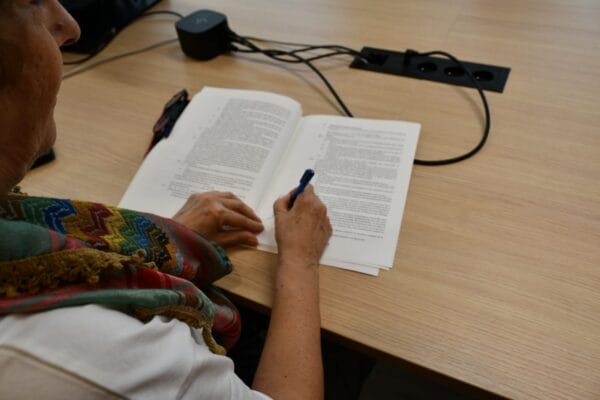
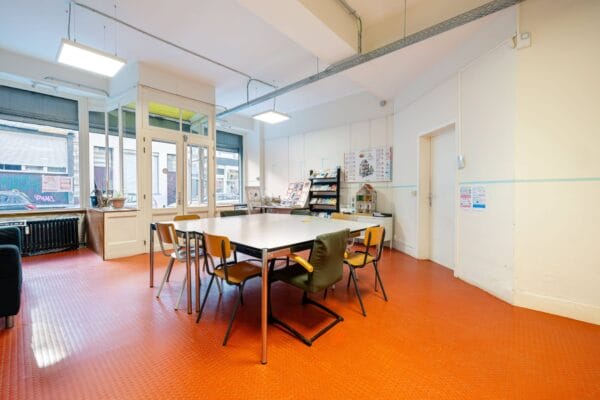
Located near Place Communale, the Comte de Flandre metro station and several schools, 16 Rue Ransfort has for several years been home to La Rue(opens in new tab), a lifelong learning organisation active in Molenbeek. The ground floor and first floor are occupied by the organisation; the other four floors mainly consist of vacant offices and storage spaces.
The building’s owner, the non-profit organisation Projet Lama(opens in new tab), wished to sell the property while preserving its social purpose. For its part, La Rue did not have the necessary resources to purchase the entire building on its own.
The decision was therefore made to collaborate rather than sell to the highest bidder.
Projet Lama sold the building to Fair Ground Brussels at a preferential price. La Rue raised the funds at its disposal by taking up supporter shares in the cooperative(opens in new tab), thereby becoming a co-shareholder in the organisation that owns the premises.
Fair Ground Brussels provided the remaining equity required for the transaction, which was further bolstered by several grants and loans from the King Baudouin Foundation(opens in new tab) and Brusoc(opens in new tab), a subsidiary of Finance.Brussels.
An asset that is not subject to the speculative market
The originality of the project lies in the division of ownership.
The Fair Ground Charitable Foundation has acquired the land itself, and its property value. It is thus irreversibly withdrawn from the market, as a charitable foundation cannot resell it for the benefit of private interests.
In practical terms, the land value of the property will no longer be able to generate speculative capital gains, nor will it be passed on to tenants in the form of higher rents.
La Rue stays at home
Thanks to this arrangement, the non-profit organisation La Rue continues to occupy the ground floor and first floor. A nine-year renewable lease has been signed, with rent frozen for ten years.
The organisation thus retains its premises and its location in the heart of Molenbeek, whilst benefiting from greater clarity regarding its long-term property costs.
“An organisation forced to move loses far more than just square metres: it loses its roots in the neighbourhood, its closeness to its supporters, and the visibility it has patiently built up over the years. Here, La Rue’s local roots are secure for the long term, and the predictability of its rental income allows it to plan its activities with peace of mind.”
Moritz Lennert, Chair of La Rue
Turning vacant office space into housing
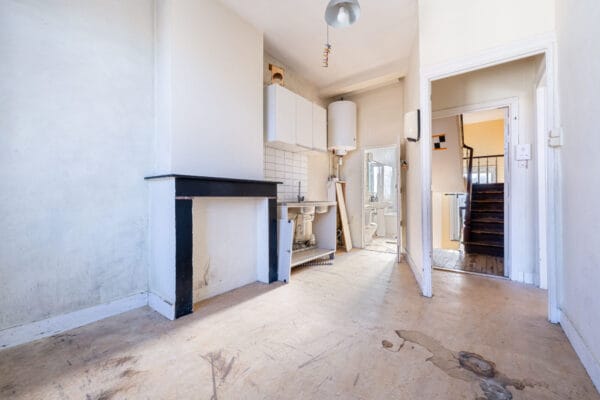
The currently vacant spaces will be entirely converted into housing.
- Two two-bedroom flats, each measuring 95 m², will be created on the second and third floors. They will be allocated via L’Ilot’s Housing Acquisition and Creation Unit(opens in new tab) (CCL) to families emerging from homelessness, referred by local services. They will be able to receive home support if they express a need for it, and L’Ilot’s Housing Settlement Service(opens in new tab) will support their move-in, especially for furnishing and logistics.
“Providing decent and affordable housing for people experiencing homelessness is the CCL’s mission, which involves 33 partners in the sector. In an increasingly competitive housing market, where the availability of social housing is dwindling whilst the need becomes more pressing by the day, our partnership with Fair Ground Brussels has become an indispensable tool in helping our clients find housing”
Jeanne Chatelle, project manager at the CCL.
- A four-bedroom, 150 m² duplex will be fitted out on the top two floors under the roof to accommodate large and/or single-parent families. La Rue will propose candidates, who will be able to stay on a temporary basis for 18 months, with the possibility of subsequently moving onto a standard tenancy agreement.
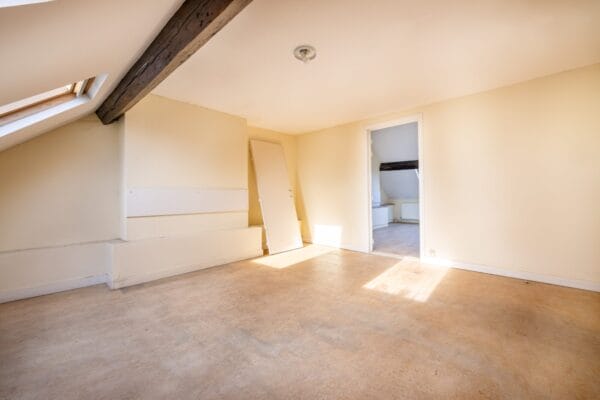
The rental management of the development will be handled by the Agence Immobilière Sociale Logement pour Tous(opens in new tab).
In total, 65 per cent of the building’s floor space, which is currently unused, will be repurposed for social and residential use.
Thanks to this project, families emerging from homelessness will find high-quality, affordable and supported accommodation just a short walk from schools and a metro station.
An ambitious renovation project
The building is structurally sound, but its energy performance and internal layout require extensive refurbishment.
The works, entrusted to the architectural practice RYA, will involve converting the offices into housing, reconfiguring the spaces and installing insulation. The aim is to improve the building’s energy performance rating from G to C, whilst prioritising the reuse of materials wherever possible.
This renovation should help to minimise maintenance requirements in the medium term and reduce energy costs for future occupants.
A collaborative project, a replicable model
The Ransfort project is more than just a successful property transaction. It illustrates what becomes possible when community organisations agree to move beyond a competitive mindset: a seller forgoes part of their capital gain to preserve the social purpose of their property; a tenant turns insufficient purchasing power into cooperative participation; foundations and funders help to secure the arrangement; and specialist operators oversee the renovation, support and management of the homes.
‘The result is entirely in line with Fair Ground Brussels’ mission: a building permanently removed from the speculative market, an association firmly rooted in its neighbourhood, a refurbished building, and the creation of three new, decent and affordable homes for families who previously had none.’
Esther Jakober, Chair of Fair Ground Brussels.
None of these stakeholders could have achieved this result on their own. For Fair Ground Brussels, this project illustrates the cooperative’s purpose: to bring together existing forces to gradually remove buildings from the speculative market and put them at the service of Brussels’ social needs on a long-term basis.